
I was recently asked where my inspiration comes from.
The truth is, it rarely comes from scrolling social media.
While Pinterest and Instagram certainly have their place, I’ve found that if all I consume is today’s trends, eventually my work starts looking like everyone else’s. The homes I admire most have depth. They tell stories. They feel collected instead of copied.
Creativity isn’t something I wait for—it is something I intentionally cultivate. These are a few of the ways I keep my imagination alive.
1. Wandering Through Antique Stores
If you’ve ever gone antiquing with me, you know I can disappear for a while.
Sometimes it’s a carved mirror, an oil painting, or an old brass candlestick that catches my eye. I bring it home, or sometimes simply take a photo, and then the research begins.
When was it made?
Who would have owned something like this?
Why did this style become popular?
Before I know it, I’ve fallen down a rabbit trail of historical design. One interesting antique often leads me to an entire design movement, a famous architect, or an era I knew very little about.
Those little discoveries become part of my design vocabulary. Even if I never use that exact antique in a client’s home, understanding where design came from helps me create spaces that feel timeless instead of trendy.
2. Reading Design Books
I have quite a collection of books from interior designers and architects, and I treasure every one of them.
Of course, the photography is beautiful. I could spend hours studying each room.
But that’s not why I buy them.
I read every book cover to cover.
The most valuable lessons are usually found in the paragraphs tucked between the photographs. Designers explain why they chose certain materials, why symmetry matters in one home but not another, or how architecture should influence the furnishings inside.
Those books have taught me that good design isn’t simply about making a room look beautiful.
It’s about understanding why a home should feel the way it does.
That philosophy shapes every project I work on.

3. Walking Through Beautiful Neighborhoods
There are neighborhoods that look nice…
…and then there are neighborhoods that completely stop you in your tracks.
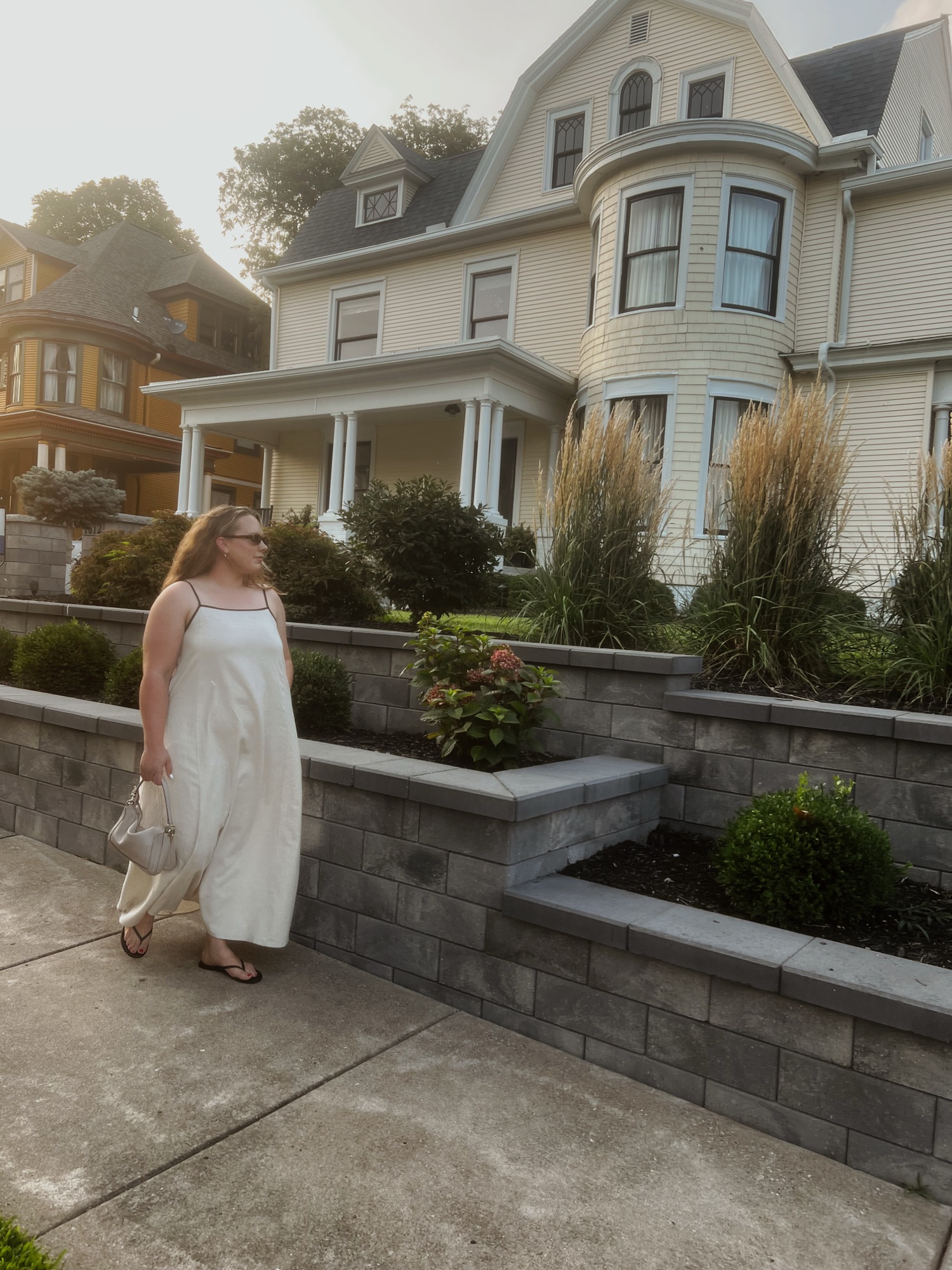
I love walking streets filled with historic homes because every house feels like it has its own personality. Even when an entire neighborhood was built within the same decade, no two homes are exactly alike.
Older architecture wasn’t afraid to impress people. It was designed to make you slow down and look.
Sometimes it’s not even the homes themselves that inspire me. It’s the way the neighborhood interacts with its surroundings—the mature trees arching over the streets, the stone walls, the winding sidewalks, or the way a house is perfectly positioned to catch the evening light.
I often find myself wondering what the architect envisioned when they first put pencil to paper.
Those walks remind me that great design doesn’t exist in isolation. A home should belong to the landscape around it.
4. Cooking and Baking
This one should come as no surprise to those who know me.
Most assume an interior designer spends every day arranging pillows and choosing paint colors.
The reality is that nearly 90% of my work happens behind a computer screen.
As both a designer and a business owner, my days are often filled with spreadsheets, bookkeeping, measurements, invoices, emails, and logistics. There are seasons where my creativity can literally get buried beneath the administrative work that keeps a business running.
That’s when I head to the kitchen.
The moment I tie on an apron, turn on a favorite playlist, and reach for the salt and pepper cellars, something changes.
My whole body relaxes, my mind becomes quiet, and instead of organizing information, I’m creating something with my hands.
The cherry on top is inviting friends and family over for dinner. There is nothing that hits all five senses better than setting the table, lighting candles, serving a meal made from scratch, and enjoying long conversations around the table. It fills me creatively in a way that few things can.
Hospitality and interior design have always belonged together.
5. Learning New Creative Hobbies
Whenever I feel creatively stuck, I usually learn something completely unrelated to interior design.
Over the years I’ve picked up gardening, floral arranging, sewing, embroidery, cross-stitch, crochet, and watercolor painting,
Am I an expert at any of them?
Not even close.
But that’s not really the point.
Each hobby gives my brain permission to think differently. They slow me down, teach patience, and remind me what it’s like to make something simply because it’s enjoyable.
Ironically, stepping away from design often makes me a better designer.
Creativity Is Built, Not Found
I’ve come to believe that creativity isn’t something reserved for naturally artistic people.
It’s something we protect.
It grows when we stay curious.
When we study history.
When we make things with our hands.
When we gather people around a table.
When we pay attention to beautiful places.
The more life I experience outside of interior design, the richer my work becomes inside of it.
And perhaps that’s the greatest lesson I’ve learned: beautiful homes aren’t inspired by perfect Pinterest boards.
They’re inspired by living a beautiful life.
What’s your favorite way to reboot your brain?
Leave a Reply