
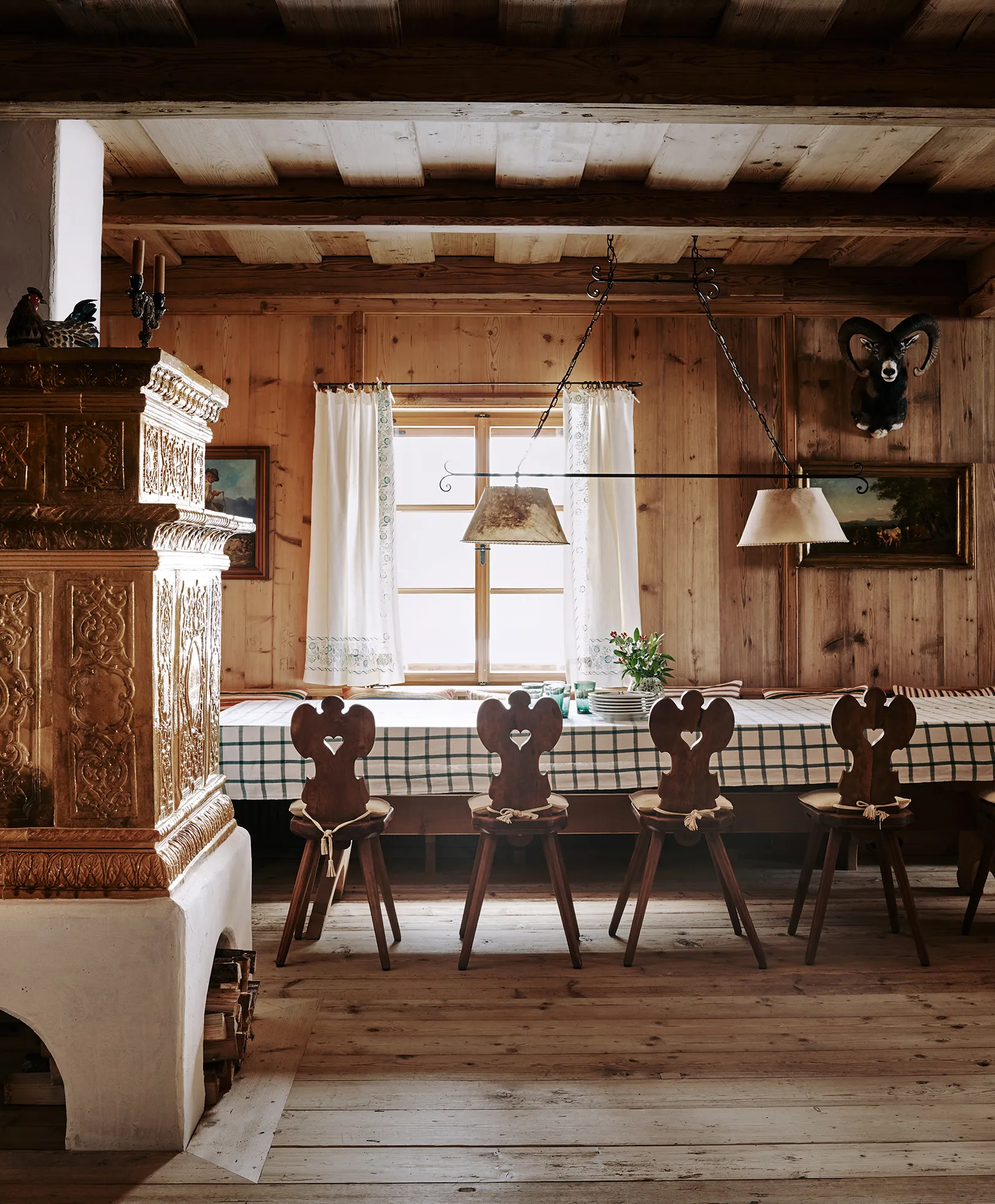
There is an ease to European interiors that is hard to replicate and even harder to fake. You feel it the moment you step inside. The room does not announce itself. It does not try to impress. It simply is, comfortable in its own skin, layered with time, and quietly confident.
American homes, on the other hand, often feel like they are trying a little too hard. Bigger rooms, cleaner lines, newer everything. Somewhere in that pursuit of polish, we have misplaced a few essential truths about what makes a home feel grounded and deeply livable.
European interiors remember them.

They allow rooms to show their age. Scratched floors, softened edges, walls that tell a story. These are not flaws to be corrected but evidence of life well lived. In many American homes, the instinct is to erase anything that hints at wear. But perfection rarely feels personal. Patina does.
European homes are also designed for living, not resale. Furniture is chosen for how it feels at the end of the day, not how it will photograph or appraise. Dining rooms anticipate long meals. Sofas invite you to stay awhile. There is less concern about whether something is timeless and more focus on whether it works for this family, in this season of life.
You see it in the furniture, too. Pieces are not matched. They are collected. A chair inherited from a grandparent sits comfortably beside something found at a flea market. Tables bear the marks of repair. Lamps do not coordinate, yet somehow they belong. The room feels assembled over time, not ordered all at once. In contrast, many American interiors feel finished the day they are installed and oddly frozen ever since.


Smaller spaces are treated with reverence rather than frustration. European homes rarely waste square footage, so every corner is considered. Storage is intentional. Furniture is scaled properly. Rooms serve more than one purpose without feeling temporary or compromised. There is an understanding that intimacy can be luxurious and that a well proportioned room will always feel better than an oversized one with nothing to say.


Then there are the books, the art, the objects. European interiors do not shy away from intellectual clutter. Shelves are full, not styled. Art is personal, sometimes imperfect, often irreplaceable. Travel mementos are not tucked away. They are part of the narrative. These homes reflect not just taste, but thought.
Perhaps most importantly, European interiors prioritize comfort without apology. Lighting is soft and layered. Curtains are functional. Chairs are meant to be sat in. There is a warmth that comes from designing for human bodies and real routines, not just visual impact.


American homes do not need to become more European. They simply need permission to slow down. To value comfort over perfection, history over novelty, and lived in beauty over something brand new. The most meaningful homes are not finished all at once. They are shaped quietly, over time, by the people who love them.
Leave a Reply